
Can You Automate an Existing Home Without Rewiring?
Yes, an existing home can often gain automation without a full rewire. A compatible retrofit module can sit behind an existing switch, while an IR blaster can control supported remote-operated appliances. But no-rewire is not a promise for every circuit: a qualified electrician must check neutral availability, usable wall-box depth, wiring condition and connected loads before confirming the scope.
What does “without rewiring” actually mean?
It usually means reusing suitable existing electrical circuits rather than chasing walls and replacing the home’s concealed wiring. It does not mean avoiding all electrical work. Fitting a module behind a switch still involves mains connections, isolation and testing by a qualified electrician.
Separate two questions before choosing products: can the existing circuit safely support the proposed control, and can the hardware fit without changing the wall box? A yes to one does not establish the other. A survey should identify which boards can stay untouched externally, which need alterations and which are better left manual.
Three ways to add control to an existing home
Keep the visible switches and add a module
A Puck retrofit module adds smart control behind existing switches while preserving the visible plate. This is a useful starting point when you like the controls already on the wall. Ask the installer to confirm the exact module and supported functions for each circuit, not just a whole-home device count.
Replace the wall controls where it makes sense
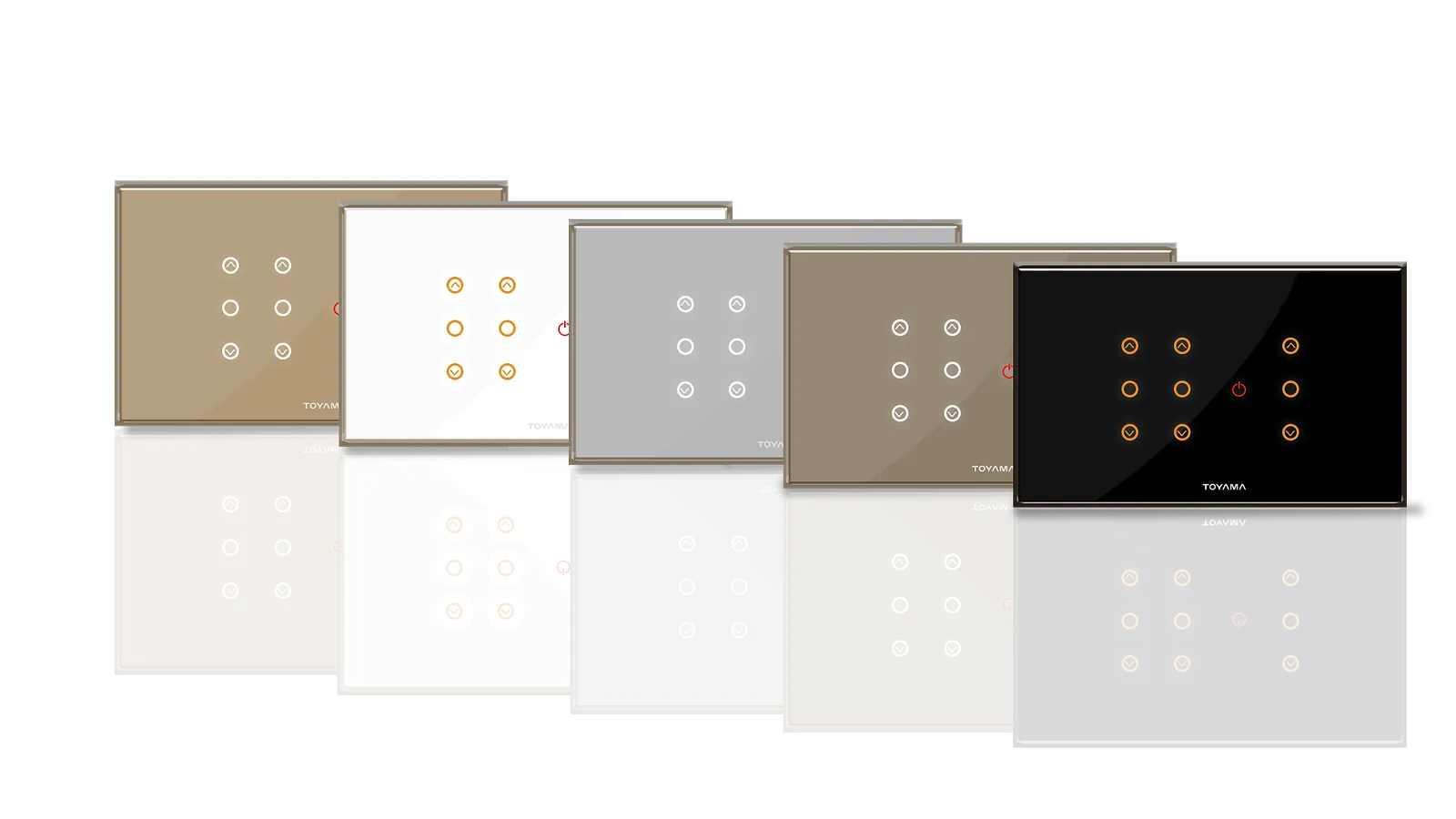
If you want a different interface as well as automation, consider smart touch switches. A replacement is not automatically a direct swap: mounting dimensions, usable depth, neutral requirements and load compatibility still need checking.
Prefer tactile manual controls? Mechanical modular switches are a separate choice from automation hardware. A new plate or glass finish does not by itself add app control; specify any compatible automation module separately.
Bring compatible AC and TV remotes into the plan
The Toyama IR Blaster provides phone control for supported IR-operated appliances such as an AC, TV or set-top box. This controls remote commands rather than changing the appliance’s mains circuit. Check the actual remote type, supported functions, power access and placement so the infrared signal reaches the appliance. Do not assume Bluetooth-only or radio-frequency remotes will work through IR.
What can stop a no-rewire installation?
Use this checklist during the survey, before ordering hardware:
| Check | Why it matters | If it is unsuitable |
|---|---|---|
| Neutral availability | The selected model may require a neutral at its installation point. | Ask for wiring changes or another approved design; do not assume no-neutral support. |
| Usable box depth | Existing wires, connectors and the module all need safe space. | Consider an appropriate enclosure change or omit that board. |
| Connected loads | LEDs, drivers, fans and high-load appliances need suitable control hardware. | Specify a compatible variant or a different control arrangement. |
| Wiring condition and protection | Automation does not repair damaged wiring or inadequate protection. | Complete the necessary electrical work first. |
| Intended function | On/off switching is different from dimming or fan-speed control. | Test the actual lamp, driver or fan with the proposed controller. |
Never bypass protection, use earth as neutral or squeeze hardware into a crowded box to preserve a “no civil work” claim. If the safe solution changes the electrical scope, it should change the quotation too.
When a wider electrical plan is the better answer
A retrofit is not always the right first step. If you are moving switchboards, adding circuits, replacing unsafe wiring or changing the lighting design during renovation, coordinate automation with the wider electrical plan. Curtain motors and other added equipment may also need power where none is available today.
Tell the electrician and interior designer about future controls before finishes are closed. Agree on circuit grouping, suitable boxes, required conductors, load compatibility and access for maintenance. Wireless communication does not remove the need for electrical power or make every existing installation suitable.
Start with one room, then test daily use
Choose a room where the benefit is clear: lights from the sofa, a bedtime scene or supported AC commands from the same app. Keep the first phase small enough to test normal wall operation as well as app control.
Before expanding, ask the installer to demonstrate what works without internet, what happens after power returns and which services need a network connection. A power cut still removes power from equipment unless a suitable backup supplies it. Local control is not backup power.
If you rent, get permission for electrical changes and agree how removal and restoration will be handled. Hardware that can be removed still needs professional disconnection, and reuse elsewhere depends on the next home’s wiring and loads.
What to send before a home visit
Share your room priorities, accessible photographs of closed switchboards, a floor plan if available, and the light, fan and appliance models you want to control. Do not remove switch plates or expose wiring yourself to obtain photographs.
For home automation in Bangalore, ask for a board-by-board assessment and a written scope separating straightforward retrofits from any electrical alterations. Installation, commissioning, network requirements, exclusions and handover should all be clear before work begins.
Ready to find out what your home can support? Request a switchboard assessment from Toyama and ask which rooms can be automated without a full rewire, and which need a different plan.
FAQ
Can I automate my existing home without rewiring?
Often, yes, for selected circuits and compatible appliances. A retrofit module can add control behind an existing switch, subject to a qualified electrician checking wiring, neutral requirements, wall-box space and connected loads. Some homes need electrical changes, so confirm the scope after a survey.
Can I keep my existing switches?
A compatible retrofit module such as Puck can sit behind existing switches, keeping the visible controls. Fit and operation depend on the selected module, wiring, available space and loads; the switch brand alone does not confirm compatibility.
What if there is no neutral wire at the switchboard?
Have an electrician check the exact module's neutral requirements. Do not assume a no-neutral installation is supported. If the required conductor is absent, that circuit may need wiring changes, another approved design or exclusion from the first phase. Never substitute earth for neutral.
Will a retrofit module fit in a shallow switch box?
Not necessarily. The installer must check usable depth and space for both the module and safe wire terminations. A shallow or crowded box may require a different enclosure, a revised design or leaving that circuit manual. Do not force the module behind the plate.
Can every light, fan and appliance be automated the same way?
No. Switching, dimming, fan-speed control and high-load appliances have different requirements. The selected hardware must suit the load and intended function. IR control also requires a compatible remote-controlled appliance and a signal path that reaches it.
Do I need an electrician for retrofit automation?
Yes for work involving mains wiring. A qualified electrician should assess and install switchboard modules and test the finished circuits. A retrofit module does not correct unsafe wiring or replace suitable circuit protection.
Found this helpful?
Share it with others who might benefit from this guide.